Project Factsheet - Building Resilience and Supporting Conflict Prevention in Ghana’s Extractive Sector
Recent violent clashes between artisanal and small-scale miners and public security forces in the Ashanti and Ahafo South regions underscored long-standing challenges in managing company-community relations around mining operations. Triggered by trespassing and theft at mine sites, the incidents reflected a broader pattern of company-community tensions in which security responses escalated disproportionately.
According to the Ghana Voluntary Principles Working Group (VPWG) assessment, key drivers of the conflict included insufficient company-community and ASM consultations, limited channels for dialogue between ASM and public security actors, inadequate training among public security forces, and weak enforcement of rules governing the use of force. The events highlighted the urgent need to strengthen conflict prevention measures and reinvigorate stakeholder engagement.
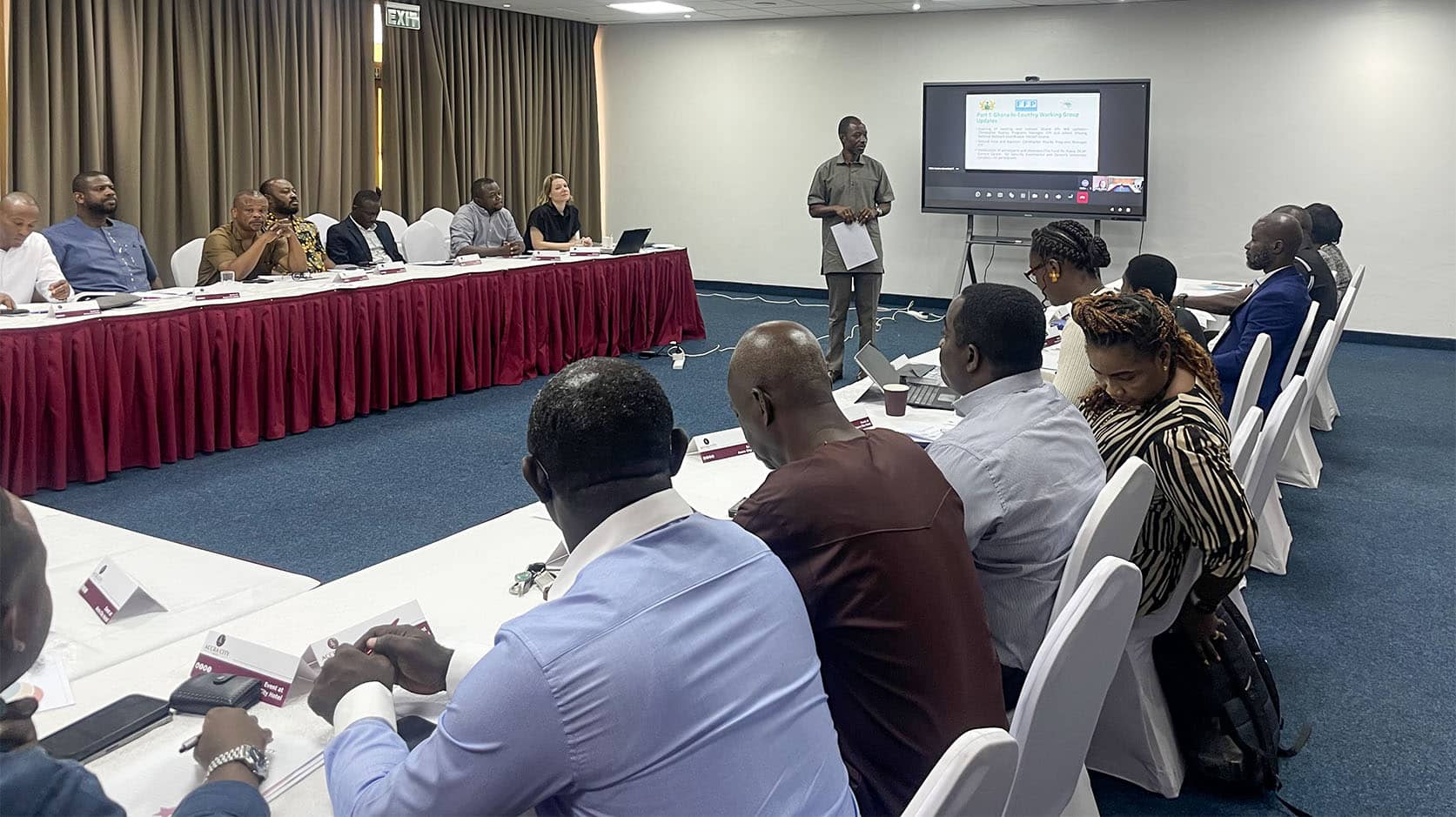
In response, DCAF worked with the VPWG and The Fund for Peace and the West Africa Network for Peace Building (WANEP) as co-chairs of the Working Group on a project to strengthen the VPWG’s role in conflict prevention and ASM community engagement around mining sites. An expert from Queen's University (Canada) specializing in resource governance, environmental and social dimensions of extractive industries, security, and gender provided support throughout the project. Through workshops and consultations, the project contextualized the Conflict Prevention Tool and the FFP State Resilience Index for the Ghana context. These tools are intended to support company stakeholders at the operational level (site) or at headquarters.
The Conflict Prevention Tool supports companies to identify gaps, blindspots, and risks in their policies, processes, and corporate culture that might create or exacerbate existing tensions and conflicts. The Resilience Index, meanwhile, helps companies identify factors of resilience - positive indicators of societal dynamics where companies can engage to maximize impact. For instance, a strong civic space and vibrant NGO landscape can compensate with monitoring and oversight of busines and human rights in contexts where national or local governance structures may be weakened.
- Read the full project factsheet here.
- Ghana-specific Questionnaire developed to contextualize the Conflict Prevention Tool
- Ghana Subnational Resilience Index Handbook
These contextualized sub-tools are part of the wider Conflict Prevention Tool (developed by DCAF, ICRC, Queen's University and AngloGold Ashanti) and the State Resilience Index (The Fund for Peace).
The Conflict Prevention Tool was updated in 2026 to support companies in integrating stronger gender considerations into corporate governance and risk management processes. This update was led by Queen's University.
Implemented together with The Fund For Peace (FFP) and WANEP from November 2025- March 2026, the project was made possible thanks to funding from the United Kingdom Foreign Commonwealth and Development Office and with support from the Federal Department of Foreign Affairs of Switzerland.