National Action Plans on Business, Security and Human Rights: Promoting Peer Learning among Governments
Governments in resource-rich and conflict-affected contexts face complex challenges in the governance of security around extractive and infrastructure projects while ensuring respect for human rights. The Voluntary Principles on Security and Human Rights (VPs), the UN Guiding Principles on Business and Human Rights (UNGPs), and initiatives in private security governance such as the International Code of Conduct for Private Security Providers (ICoC) provide complementary frameworks to guide state engagement with private sector actors, public and private security providers, and affected communities.
In the framework of the Voluntary Principles Initiative (VPI), during informal engagements between the representatives of the government of the Democratic Republic of Congo (DRC) and Mozambique, government representatives have expressed a strong desire for the organization of structured peer-to-peer exchanges to support more effective development of national action plans (NAPs) that drive implementation of initiatives. Peer learning can promote coherence, reduce initiative fatigue and avoid over-focus on the administrative development of NAPs at the expense of working on their implementation.
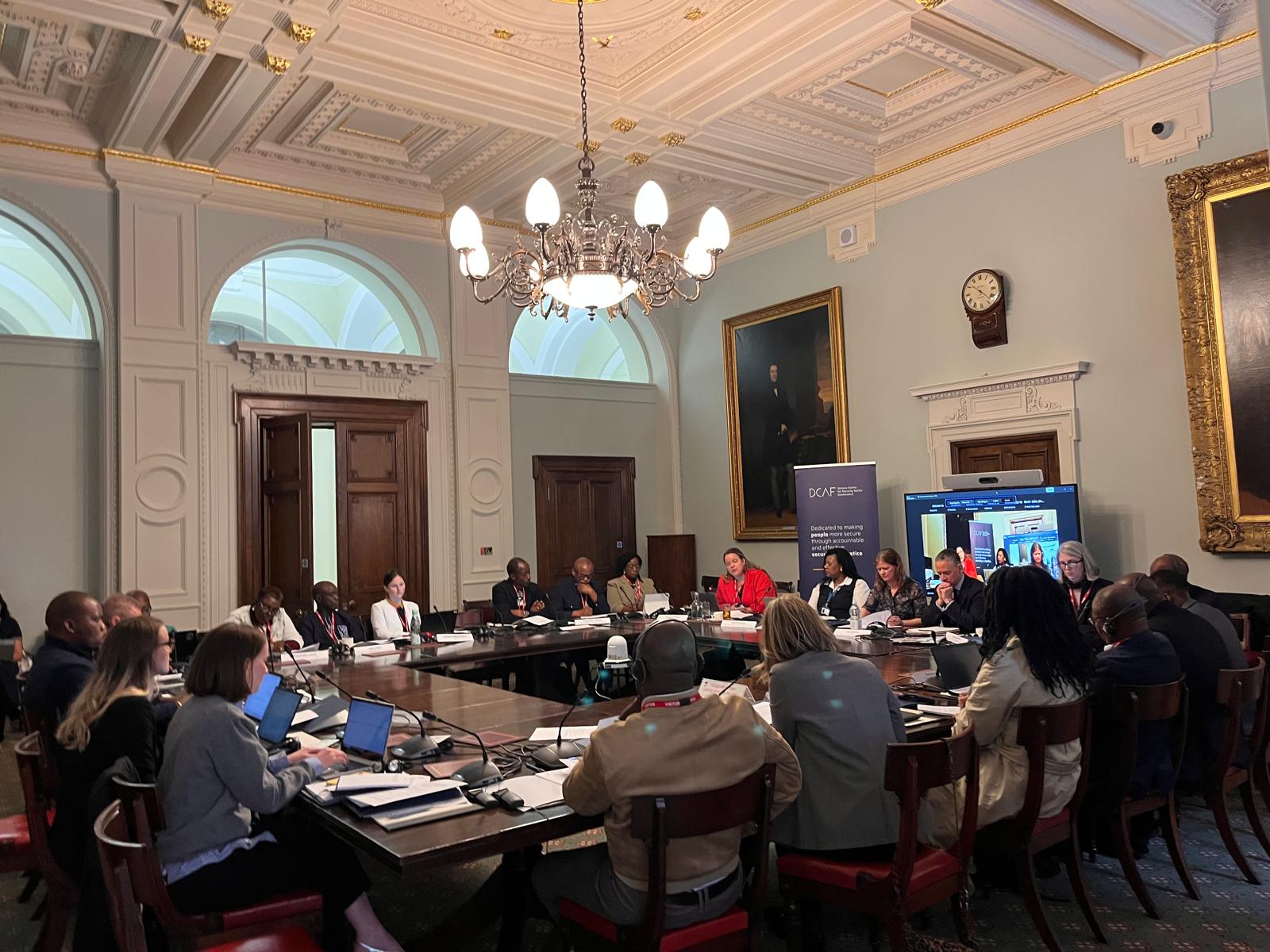
In March 2026, DCAF, the United Nations Development Programme (UNDP), and the VPI, with support from the United Kingdom and Switzerland organized a workshop to promote peer learning between government representatives of Mozambique, the DRC, Ghana, and Nigeria. While all countries are at varying stages of engagement with the VPs, the UNGPs, and private security governance, each has developed practical experience, institutional arrangements, and policy approaches that can offer valuable lessons to peers.
The peer learning workshop had the following objectives:
- Enhance participants’ understanding of different frameworks (VPs, UNGPs, and private security governance frameworks) and their complementarities.
- Increase participants’ understanding of roles and responsibilities of governments under the VPs, UNGPs, and private security governance frameworks.
- Share country experiences, good practices, and lessons learned in developing NAPs and implementing these frameworks at policy and operational levels.
- Explore practical approaches to policy coherence, including alignment between NAPs on business and human rights, security sector governance, and extractives regulation.
- Identify common challenges and opportunities for regional or cross-border cooperation and develop actionable recommendations for participating governments
For a detailed report of the workshop – download the report here: