DCAF and ICoCA’s joint mission to Lima marks the start of the "Critical Raw Minerals Secure" project in Peru
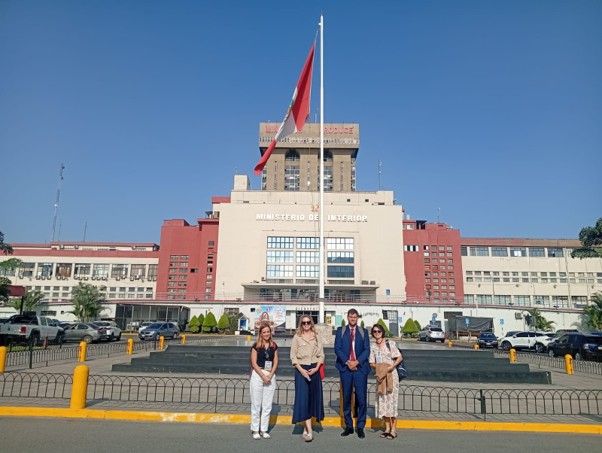
From 21-25 September 2026, a joint DCAF-ICoCA team travelled to Lima to conduct a scoping mission as part of the implementation of the "Critical Raw Minerals (CRM) Secure" project in the country.
CRM Secure is a four-year project funded by the European Union and implemented jointly with International Code of Conduct Association (ICoCA) with strategic support from the OECD. It is a global project, to be implemented in six countries, with implementation starting in 2026 in two pilot countries, Mozambique and Peru. The main objective of the project is to strengthen responsible, community-focused security practices in the critical raw materials (CRM) sector. As part of its specific objectives, the project will develop a body of evidence, lessons learnt, and best practices, to contribute to dialogue around responsible security in national and international fora. Ultimately, the project seeks to contribute to the EU’s efforts towards making mineral supply chains more sustainable, safe and resilient.
During the mission, the team met with over 25 stakeholders and representatives from government, international partners, mining and security companies, academics and journalists, civil society and local communities, to develop a better understanding of the CRM landscape in Peru. These meetings allowed the team to examine likely conflict flashpoints – including water management, the rise in informal and illegal mining, and the generalised mistrust among different stakeholders, fuelled also by social media narratives – and understand how the security ecosystem operates around CRM sites.
The team was able to extract some key takeaways that will inform the next steps in the implementation of the programme:
- Responsible security in CRM operations needs to integrate the specific concerns of communities, the private sector, and authorities. These concerns cannot be detached from political, social and environmental realities, such as the impacts of climate-related events. Stakeholders reiterated widespread concerns over how El Niño, which is set to become ‘supersized’ in the upcoming months, will impact the country’s main CRM sites, from potential droughts in high altitudes to flash floods in lower regions. Weather phenomena are intrinsically linked to security, particularly as water becomes a central element in relations between mining companies and communities, and hence a key security asset. By supporting community understanding of their rights and access to appropriate channels to raise concerns, the CRM Secure project seeks to help reduce conflict and strengthen community resilience.
- Concerns around CRM exploitation differ among stakeholder groups: for communities, they revolve mostly around environmental, livelihoods, and land issues; for mining companies, these include the protection of their assets, the presence of informal or illegal miners in their concessions, or the potential of social unrest; while public security actors cited mostly limited capabilities and training of law enforcement and private security personnel, grey regulatory issues, and the rise of illegal mining. Acknowledging that security may look different depending on the actor, inclusive security governance must be a central component of CRM projects and policy. In that regard, the CRM Secure programme aims to support local ownership and championing of multistakeholder engagement, understanding that if such dialogue spaces are actively and sustainably maintained, actors will be able to jointly discuss, agree and implement adapted resolution mechanisms and achieve long-lasting results.
- A key component of the programme will be the generation of evidence and lessons learnt, to inform policy discussions at national and international levels. This evidence will be instrumental in supporting EU efforts to reinforce human rights due diligence, particularly in conflict-affected and high-risk areas. Best practices and lessons learnt gathered through the project will also support the development of responsible security arrangements under the EU Global Gateway and in the EU’s bilateral mineral partnerships. In that sense, the CRM Secure project seeks to encourage knowledge generation and exchange within the security governance and CRM spheres, as a means to contributing to more coherent and effective international engagement and supporting responsible and conflict-sensitive CRM value chains.
Upon conclusion of the mission, the DCAF-ICoCA team continued conversations with stakeholders and the EU Delegation, to finalise the site selection for the project. The next step will be the development of baseline studies that will then guide the implementation of activities, expected to start in 2027.