Strengthening Regulation of the Private Security Industry in Nigeria

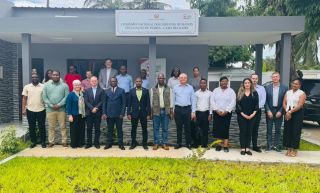
In February 2026, DCAF partnered with the African Law Foundation (AFRILAW), the National Institute for Legislative and Democratic Studies (NILDS) and the Nigeria Security and Civil Defence Corps (NSCDC) to organise a two-day Parliamentary Retreat on Private Security Governance and Legislative Oversight in Abuja. The retreat brought together members and representatives of nine National Assembly Committees, NSCDC officials, ICoCA representatives and international partners to discuss opportunities and challenges associated with private security governance in Nigeria. Discussions focused on international standards contained in the Montreux Document and the International Code of Conduct for Private Security Service Providers, regulatory gaps, enforcement challenges and priorities for legislative reform.
The retreat strengthened dialogue between parliamentarians and regulators and increased awareness of the role legislative oversight plays in ensuring accountable and effective governance of the private security sector. Participants developed a communiqué outlining practical recommendations for Committee Chairpersons and parliamentarians aimed at strengthening oversight and guiding future reform efforts. The communiqué was subsequently disseminated to National Assembly leadership and relevant committees.
In parallel,
DCAF continued supporting implementation of a pilot methodology for identifying
and regulating private surveillance services from January to June 2026. NSCDC
officers worked with a representative of the Nigeria Data Protection Commission
(NDPC) to assess regulatory challenges associated with private surveillance
technologies. The exercise generated recommendations relating to legal
frameworks, institutional mandates, technology oversight, data governance and
cooperation between regulatory authorities.
In March, DCAF further supported a multi-stakeholder
review process of the NSCDC Private Guard Training Manual. Representatives from
government institutions, private security companies, civil society organisations
and international partners (i.e. DCAF, Privacy International and ICoCA) contributed
recommendations aimed at strengthening training standards, professionalisation
and respect for human rights throughout the sector.